

Reading notes twice is not revision: how spacing actually works
Your notes look colourful. Your mock does not. The gap is not effort. It is timing and testing.

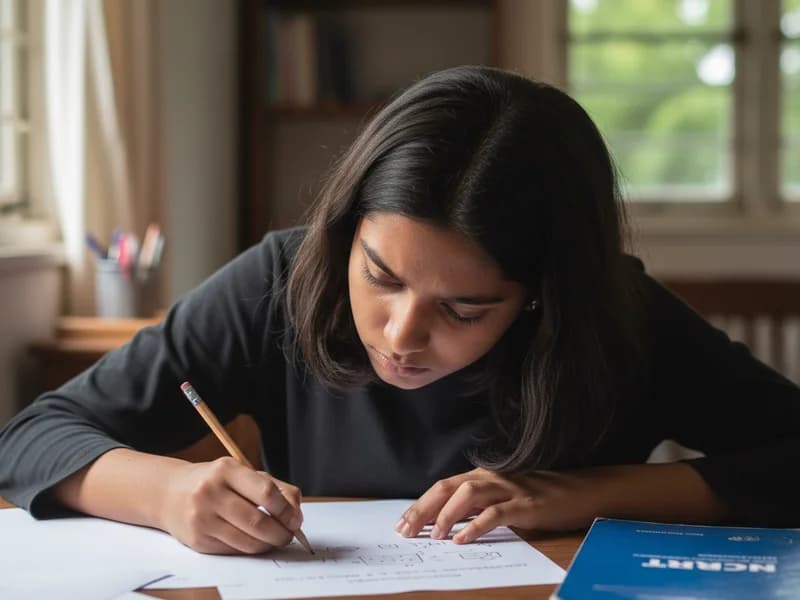
Sunday 8pm. Textbook open. Highlighter uncapped. You read Chemical Reactions once for school, once "for boards." It feels smoother the second time. Definitions slide by. Equations look familiar. You close the book satisfied. Wednesday mock: blank on balancing steps you "knew" Sunday. You tell your mother you studied. You did. You just did not revise.
Sunday 8pm. Textbook open. Highlighter uncapped. You read Chemical Reactions once for school, once "for boards." It feels smoother the second time. Definitions slide by. Equations look familiar. You close the book satisfied. Wednesday mock: blank on balancing steps you "knew" Sunday. You tell your mother you studied. You did. You just did not revise.
Reading notes twice in one sitting is recognition practice — the page looks familiar. Boards test retrieval — can you produce the answer cold under a timer. Spaced retrieval is the fix: attempt questions, mark errors, wait at least 48 hours, retry with new items.
Who this is for
- CBSE and ICSE students who re-read and still blank on mocks
- Students whose notes look colourful while papers look empty
- Anyone who confuses "I recognise this" with "I can answer this"
Revision vs re-visiting: Revision = retrieval practice + spacing. Re-visiting = reading the same page again until it feels easy. If you cannot answer three questions cold on a chapter, you have not revised — you have re-visited.
15 min
Cold quiz swap
48h
Minimum retry gap
3
Cold questions min
20
Marks weak-chapter drill
Why the second same-night read fails
Same-night second reads inflate confidence via recognition, not recall under exam timers. Highlighting and re-reading create fluency that feels like learning. Closed-book attempts expose the gap highlighting hides. That gap is exactly what Wednesday mocks punish.
| Instead of… | Do… |
|---|---|
| Re-read the chapter a second time | Close the book; attempt 3–5 cold questions |
| Re-highlight already yellow lines | Write definitions from memory, then check |
| Watch the same solution video again | Attempt a similar problem first |
| Same-night identical redo | Fresh paper after 48 hours on fails only |
Same-day spaced mini-loop
First read (necessary)
NCERT or notes for first exposure — still required.
Close the book
No second pass tonight for the same pages.
15-minute cold quiz
3–5 questions or a short Mingi 20-mark set on that chapter.
Mark fails honestly
List the ideas you could not produce.
Retry after 48 hours
New questions on the same fails — not the same night.
When boards are under 48 hours
If the paper is tomorrow, prioritise sleep and formula sheets you already practiced retrieving — not a brand-new second read of untouched chapters. Spacing needs time you no longer have. Protect what is already half-stable; do not open three new units at midnight.
Spaced repetition applies to Science definitions and Maths procedures alike. Pair cold quizzes with Mingi Words for terminology and 20-mark weak-chapter drills for application. Nightly short retrieval beats weekend marathon re-reading for mark movement within two weeks.
Know it sooner: Swap tonight's second read for a timed drill. The report card will show whether you can produce answers — not only recognise them.
For the student reading this: Rule: if the second open of the book is tonight, close it and write three answers cold first. That is revision.
Know it sooner
Know it sooner with a timed drill that shows whether you can produce answers, not only recognise them.
Swap tonight's second read for a 15-minute cold quizHonest limits
- First exposure still needs reading; this guide targets the second same-night pass that feels productive but is not.
- If boards are under 48 hours, prioritise sleep and formula sheets you already practiced retrieving.
See this week without asking.
Know it sooner with a timed drill that shows whether you can produce answers, not only recognise them.
Open the parent dashboardThe Takeaway
- Revision equals retrieval practice plus spacing. Reading twice equals neither.
- If you cannot answer three questions cold, you have not revised; you have revisited.
- 48 hours between retries on the same chapter cluster.
- Swap hour-two note reread for a 15-minute timed mini-quiz.