

11pm: What goes through a parent's head at the door
She finished her skincare routine. The WhatsApp parent group has 47 unread messages. His door is half-closed and the desk lamp is on. This is the moment every working mother recognises.
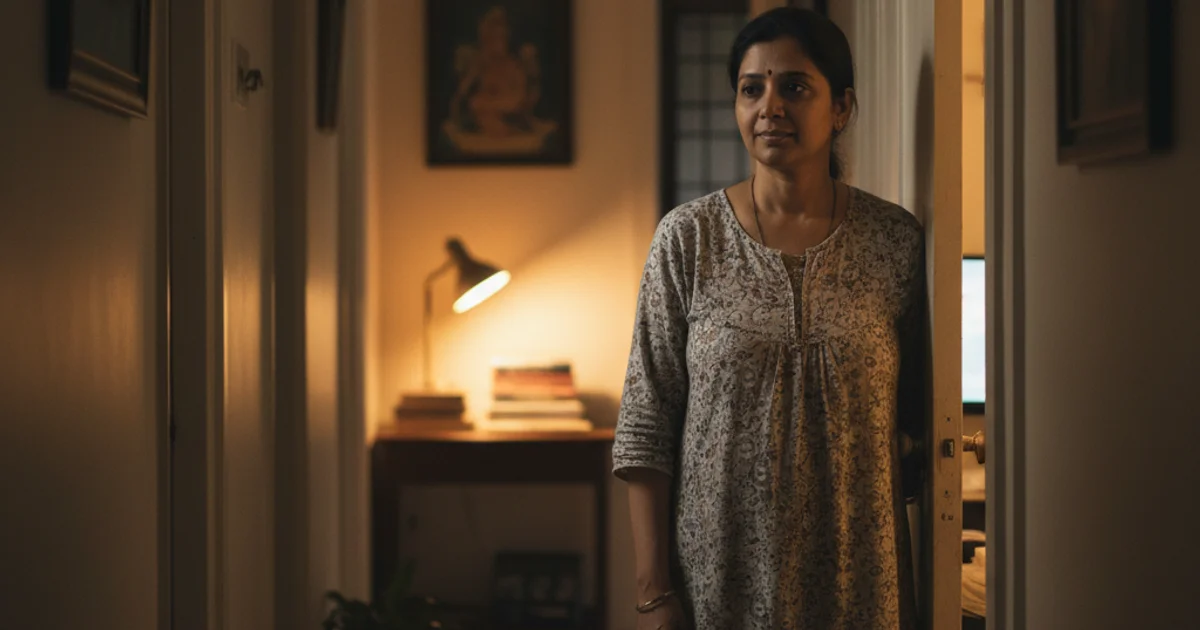
It is 11:04pm. You already replied to two work emails. His door is half-closed. Through the gap you see the desk lamp, textbooks fanned open, laptop lid up, AirPods beside a half-finished diagram. His phone is face-down. You tell yourself that means focus. You are not sure.
It is 11:04pm. You already replied to two work emails. His door is half-closed. Through the gap you see the desk lamp, textbooks fanned open, laptop lid up, AirPods beside a half-finished diagram. His phone is face-down. You tell yourself that means focus. You are not sure.
This moment is not really about marks. It is about connection before board season — and about the habit of asking questions that only produce "fine." One weekly graded paper plus a Thursday talk beats five nightly door knocks that end in silence.
Who this is for
- Parents of Class 9–12 teens in CBSE or ICSE board season
- Working parents who check the door after their own work ends
- Anyone tired of "Did you study?" getting the same empty answer
The 11pm pause vs the Thursday review: The 11pm pause is emotional proximity — one low-pressure sentence at the door. The Thursday review is evidence: one graded 20-mark paper you look at together. Mix them. Do not turn 11pm into a full marks interrogation.
1
Question at the door
1/wk
Graded paper review
Thu
Evidence conversation
15 min
Sunday dashboard max
What "fine" often means
Teens often say "I'm fine" when they lack language for partial understanding — not only when they skipped work. Phone face-down is frequently habit, not proof of retrieval practice. Quiet desk light can mean stuck on one problem without feedback.
| Try | Avoid |
|---|---|
| "What felt hard in that chapter?" | "How many hours did you put in?" |
| "Want help on one stuck problem?" | "Your cousin already finished the syllabus." |
| "We look at one paper Thursday." | A ten-minute lecture at 11:10pm |
| "I am glad the lamp is on — sleep by 11:30." | Standing in the doorway until they perform focus |
From nightly knocks to weekly evidence
Pick one weeknight
Generate a 20-mark paper on the weakest school-test chapter.
Teen solves and grades
Same night or next day — finish the paper.
Thursday 15 minutes
Open the report; discuss one misconception only.
11pm stays light
One connection sentence; no marks cross-exam.
Sunday optional
PIN dashboard: weak topics + consistency — see parent weekly checklist.
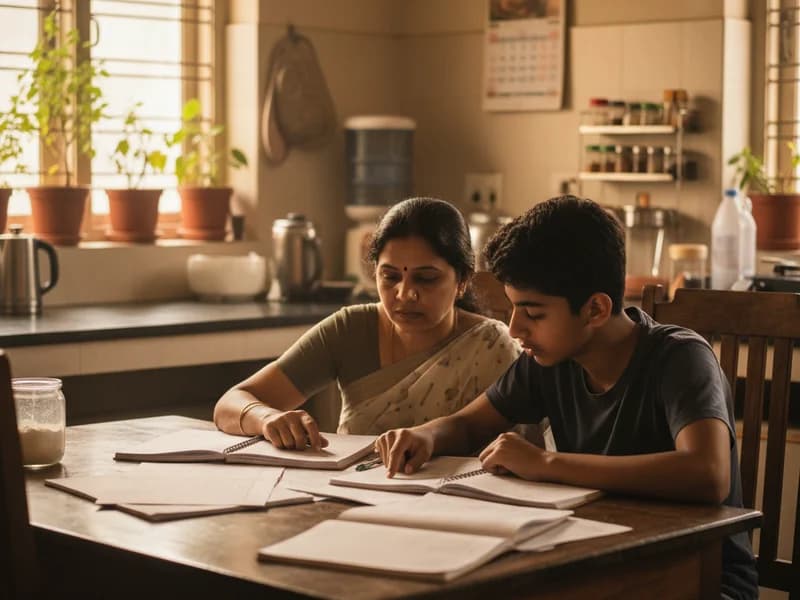
Board-season friction peaks in February–March for many Class 10 homes. Batch anxiety into one evidence review so the hallway is not a nightly courtroom. If your teen is in acute distress, talk to the school counsellor first — this guide is for routine friction, not crisis.
Know it sooner: One graded paper per week names weak chapters before report cards. Five "fine" answers do not. Use Mingi for the paper; use the door for warmth.
Sleep still wins
A weekly paper does not replace sleep rules or school teacher updates. Protect 11:30 lights-out even in board leave.
⚡ Parent move: At the door say: "I am not checking hours. Thursday we look at one paper together. Tonight — what felt hard, in one sentence?"
A sample week without nightly drama
Monday: teen finishes one 20-mark paper on the weakest school-test chapter. Tuesday: light school load; rewrite two wrong items. Wednesday: second subject or Words. Thursday: fifteen-minute evidence talk at the kitchen table — one misconception only. Friday–Saturday: school and rest buffers. Sunday: optional PIN dashboard for parents. 11pm stays a one-sentence check, not a hearing.
If Thursday gets skipped because of travel or illness, move it — do not stack two evidence talks into one exhausted night. The ritual survives when it is allowed to shift by a day without guilt.
Know it sooner
Swap three nightly "fine" answers for one graded practice paper you review together on Thursday.
Generate one 20-mark paper for Thursday's talkHonest limits
- A weekly paper does not replace sleep rules or school teacher updates.
- If your teen is in acute distress, talk to the school counsellor first; this guide is for routine board-season friction.
See this week without asking.
Swap three nightly "fine" answers for one graded practice paper you review together on Thursday.
Open the parent dashboardThe Takeaway
- 11pm is about connection, not inspection; one honest sentence beats a ten-minute lecture.
- Ask about difficulty, not duration: "What felt hard?" not "How many hours?"
- Know it sooner with one graded paper per week; evidence beats five "fine" answers.