
DPDPA-compliant learning apps: what Indian parents should verify
DPDPA 2023 changes what children's apps must disclose. Run this five-minute verification before you hand your child a login.

India's Digital Personal Data Protection Act 2023 changes what children's apps must disclose. Run this five-minute verification before you hand your child a login.
Verify consent, purpose limitation, and deletion paths. Prefer graded history over chat logs for progress signal.
India's Digital Personal Data Protection Act 2023 changes what children's learning apps must disclose. Before you hand over a login in board season, spend five minutes verifying consent, purpose, ads, and deletion — not only "is it free?"
Mingi is operated by Ingagenow Marketing Consultant LLP and is DPDPA 2023 aligned: no selling children's data to advertisers, AI prompts use subject context not student names or phone numbers, and the parent dashboard is PIN-gated for mastery trends rather than chat surveillance. Use this checklist on every edtech tool, including us.
Who this is for
- Parents comparing CBSE/ICSE learning apps before board year
- Families asked to share phone numbers, photos, or school IDs with multiple tools
- Anyone who wants graded progress without ad-funded child profiles
What "DPDPA-aligned" should mean in plain language: Clear purpose for data collection, parental visibility for children's accounts, a path to delete or withdraw consent, and no selling personal data for advertising. Marketing slogans are not compliance — look for specific behaviours in privacy policy and product UI.
5 min
Verification checklist
PIN
Parent progress gate
No ads
Child data for sale
DPDPA
2023 India law
Five-minute verification checklist
| Check | Good sign | Red flag |
|---|---|---|
| Consent | Parent can create/link and see purpose of data use | Child-only signup with no parent path |
| Purpose | Data used for learning, grading, support | Vague "improve experience" + third-party ads |
| Ads / sale | Explicit "we do not sell children's data" | Behavioural ads targeting the child |
| Deletion | Documented delete / withdraw consent path | No way to remove account or data |
| Progress signal | Graded history or mastery parents can review | Only chat logs or endless scroll activity |
Before you pay for another app
Open privacy policy on phone
Search for children, minor, sell, advertise, delete.
Test parent visibility
Is there a real progress view or only marketing screenshots?
Check login data asked
School ID photos and unnecessary contacts are higher risk.
Run one free practice loop
See what is stored after a graded attempt.
Set parent PIN if available
On Mingi: PIN-gated mastery, not chat surveillance.
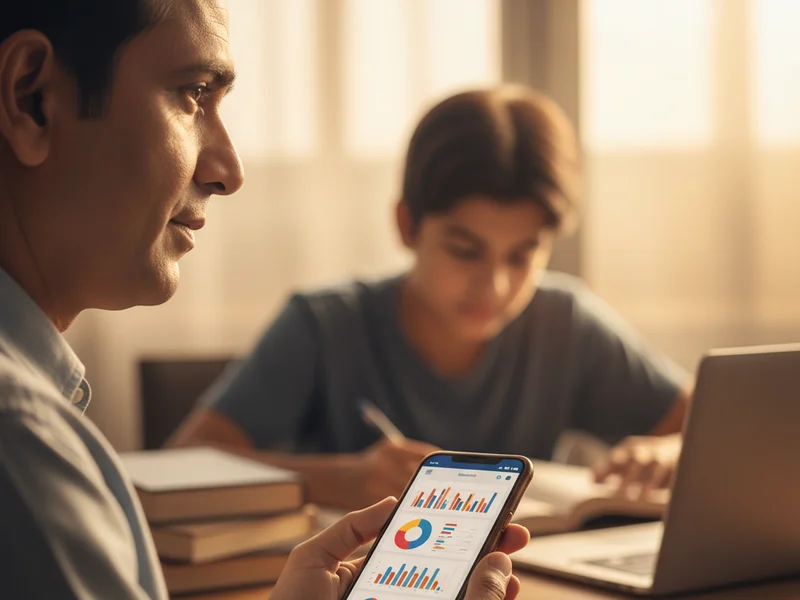
Prefer tools that show graded worksheet history over apps that only keep chat transcripts. Grades create a learning signal; chat logs create a surveillance temptation without naming weak chapters.
Mingi specifics parents can verify in-product: PIN-gated parent dashboard (SHA-256 hashed PIN), mastery from graded attempts, DPDPA-aligned posture, operated by Ingagenow Marketing Consultant LLP. AI prompts use subject context — not student names or phone numbers.
This is not legal advice
DPDPA interpretation depends on role and processing. This guide is a practical parent checklist. For formal compliance opinions, consult a qualified professional. Mingi's posture is described as aligned, not as a certificate that replaces reading our privacy policy.
⚡ Parent move: Before another login: "Show me how I delete data, whether ads use my child's profile, and what I can see as a parent — not only the free trial CTA."
How Mingi handles progress without chat surveillance
Parents often want visibility and teens want privacy. Graded mastery strikes that balance better than reading every chat. On Mingi, the PIN dashboard shows topic trends from submitted papers. Students keep the solve experience; parents get weak-chapter signal. That design is intentional under a DPDPA-aware product posture.
Still verify for yourself: complete one free graded worksheet, open the parent PIN flow, and confirm you are not seeing private chats. Then compare that experience to any other app that only offers activity streaks and no parent data controls.
Re-check privacy pages once a year or after major app updates. Features and third-party SDKs change. A checklist done in Class 8 may need a refresh in Class 10 board year.
Know it sooner
Know it sooner how your child's data is handled before board season panic.
Complete one graded worksheet with your child, then set a parent PINHonest limits
- The four-digit parent PIN is a UX gate on shared devices, not banking-grade security. Server-side RLS enforces actual data isolation.
- Re-audit consent yearly or when any app adds social, camera, or third-party integrations.
See this week without asking.
Know it sooner how your child's data is handled before board season panic.
Open the parent dashboardThe Takeaway
- Verify consent and deletion paths before handing your child a login.
- Reject apps that monetise children's behavioural data for ad targeting.
- Prefer tools with graded history over chat logs for signal without surveillance.
- Re-audit consent yearly or when the app adds social, camera, or third-party integrations.